Additional information
| State & Union Territories | Bihar |
|---|---|
| Year of Publication | 2019 |
| Source Type | Environmental (Water, Soil, Air, Dust) |
| Authors | Dr. Arbind Kumar, Dr. K. D. Jha and Dr. Seema |


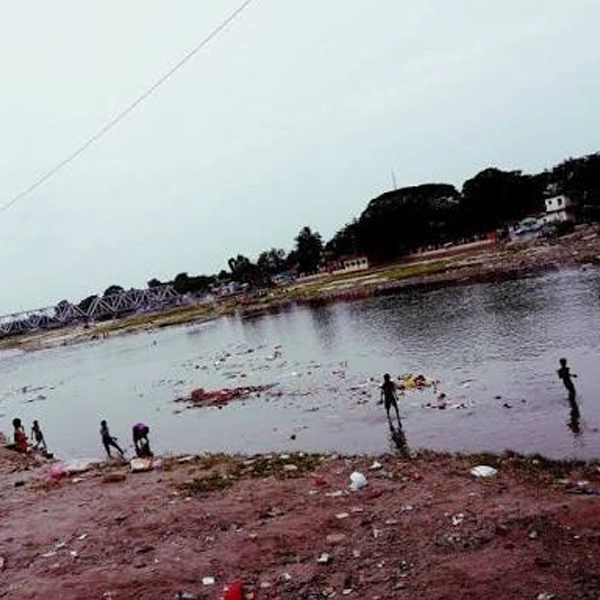
The present study includes a systematic analysis of bed sediment contamination by heavy metals of the Mahananda River flowing through Seemanchal zone of Bihar, India. To assess the spatial distribution, degree of contamination and risk assessment of heavy metals, seven selected metals were examined from the freshly deposited river sediment. The heavy metal concentration in the sediments ranged from 49.51-82.78, 83.64-141.68, 121.34-198.67, 41.28-83.43, 245.67-423.64, 0.53-1.05 and 17.91-29.62 mg kg-1 for Cu, Zn, Cr, Ni, Mn, Cd and Pb respectively. Highest concentration of heavy metals was found in the sediment of river especially, midstream and downstream. According to degree of contamination and pollution load index assessment, heavy metals pollution was highest in the sediment of downstream and lowest in upstream of River. Geo-accumulation indices showed that sediment was uncontaminated to moderately contaminate and may adversely affect the fresh water ecology of the river. Metal enrichment factor (EF) for all sampling stations was recorded 2 – 8. The exceptionally high EF value was observed for Cd (6.32-7.68) at all sampling stations. The mean ecological risk factor (Ei r) values were found below 40 except Cd (Ei r = 75.2) and average potential ecological risk index (PERI) value (99.35) of the combined heavy metals showed that the metals in the sediment of River in the Seemanchal zone caused low potential ecological risk overall. Based on the comparison of heavy metals concentration with the consensus-based sediment-quality guidelines Ni and Cr are likely to result to the deleterious effect on bottom-dwelling organisms. Our findings also suggest that 33.3% of sediment samples have mean probable concentration quotients (m-PEC-Q) values in between 0.1 – 1, indicating moderate toxicological risks for sediment dwelling organisms, with a toxicity incidence of between 15 – 29% in the study areas. Positive correlation was recorded among Cu, Zn, Pb, Ni, and Cr indicated common pollution sources or identical geochemical behaviour for these metals. Therefore proper management is required to control the direct dumping of wastewater and wastes in the river and continuous monitoring, and cleanup operation is suggested to minimize pollution.
| State & Union Territories | Bihar |
|---|---|
| Year of Publication | 2019 |
| Source Type | Environmental (Water, Soil, Air, Dust) |
| Authors | Dr. Arbind Kumar, Dr. K. D. Jha and Dr. Seema |
| State & Union Territories | Bihar |
|---|---|
| Year of Publication | 2019 |
| Source Type | Environmental (Water, Soil, Air, Dust) |
| Authors | Dr. Arbind Kumar, Dr. K. D. Jha and Dr. Seema |