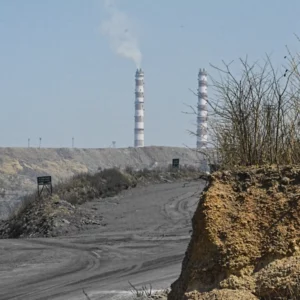
Lead (Pb) is of major environmental concern due to its toxicological importance. The anthropogenic emission of Pb is at least 100 times higher than natural emissions. Soil and dust are significant sources of Pb exposure. Lead is generally immobile in soil and accumulates in the upper layers. Lead particles may enter homes via shoes, clothes, pets, and windows. Central India is rich in deposits of natural resource materials such as coal, pyrite, dolomite, and alumina that contain Pb and other heavy metals at the trace levels, and the substantial exploitation of these materials has tended to increased contamination of water and geological formations. Here we present data on Pb concentrations in the water, soil and sediment samples (n=158) collected from 70 locations in Chhattisgarh state, Raipur region. Lead concentrations in the surface water (n=44), groundwater (n=44), soils (n=60) and sediments (n=10) ranged from 6 to 1410, 3 to 52, 12.8 to 545, and 31 to 423 microg g(-1), with mean values of 305, 16, 102 and 190 microg g(-1), respectively. Most of the Pb fractions of >80% can be leached out with the chemical extractants EDTA, acetic acid, and hydroxylamine hydrochloride. Lead has accumulated in the soil clay fraction due to its relatively large surface area and decreases with increasing depth in the soil profile.
In this research paper, detail study about the blood lead level (BLL) among petrol pump workers of the Bhopal city was described. To study the blood lead level among petrol pump workers in Bhopal city, BLL was determined experimentally by taking the blood sample of 26 peoples with a varying age group from 18 years to 66 years. It was observed that BLL was on the higher side for the peoples working in the petrol pumps. The effects of different factors on the estimated BLL of individuals in the present investigation have been comprehended and are elucidated in terms of descriptive statistics such as means and standard errors including lower and upper bound 95% confidence intervals (CI). It was found that the BLL were 97.61±3.07 µg/dl with the lower and upper bound 95% confidence intervals for means being 91.28 to 103.93, µg/dl in the individuals working at petrol pumps.
The present study includes a systematic analysis of bed sediment contamination by heavy metals of the Mahananda River flowing through Seemanchal zone of Bihar, India. To assess the spatial distribution, degree of contamination and risk assessment of heavy metals, seven selected metals were examined from the freshly deposited river sediment. The heavy metal concentration in the sediments ranged from 49.51-82.78, 83.64-141.68, 121.34-198.67, 41.28-83.43, 245.67-423.64, 0.53-1.05 and 17.91-29.62 mg kg-1 for Cu, Zn, Cr, Ni, Mn, Cd and Pb respectively. Highest concentration of heavy metals was found in the sediment of river especially, midstream and downstream. According to degree of contamination and pollution load index assessment, heavy metals pollution was highest in the sediment of downstream and lowest in upstream of River. Geo-accumulation indices showed that sediment was uncontaminated to moderately contaminate and may adversely affect the fresh water ecology of the river. Metal enrichment factor (EF) for all sampling stations was recorded 2 – 8. The exceptionally high EF value was observed for Cd (6.32-7.68) at all sampling stations. The mean ecological risk factor (Ei r) values were found below 40 except Cd (Ei r = 75.2) and average potential ecological risk index (PERI) value (99.35) of the combined heavy metals showed that the metals in the sediment of River in the Seemanchal zone caused low potential ecological risk overall. Based on the comparison of heavy metals concentration with the consensus-based sediment-quality guidelines Ni and Cr are likely to result to the deleterious effect on bottom-dwelling organisms. Our findings also suggest that 33.3% of sediment samples have mean probable concentration quotients (m-PEC-Q) values in between 0.1 – 1, indicating moderate toxicological risks for sediment dwelling organisms, with a toxicity incidence of between 15 – 29% in the study areas. Positive correlation was recorded among Cu, Zn, Pb, Ni, and Cr indicated common pollution sources or identical geochemical behaviour for these metals. Therefore proper management is required to control the direct dumping of wastewater and wastes in the river and continuous monitoring, and cleanup operation is suggested to minimize pollution.
The study was conducted to find out the content of lead (Pb), cadmium (Cd), arsenic (As) and copper (Cu) in some selected vegetables grown in and around Nashik city, Maharashtra state (India). Vegetable samples from four different sites were collected and digested by using tri-acid digestion method. Concentrations of heavy metals were analyzed by using atomic absorption spectrophotometer. The results of this study showed that there was wide variation in the concentration of these metals in vegetables collected from different sites. Vegetables grown in the vicinity of an industrial area were most contaminated while vegetables grown in rural area were least contaminated. Analytical results indicated that the concentration of lead in 35% vegetable samples collected from industrial area were more than maximum permitted limit. The high concentration of cadmium was found in onion and coriander, while lead content was recorded high in spinach and cauliflower. Arsenic concentration in 25% samples collected from industrial area was more than maximum permitted limit. Copper concentration in most of the vegetable sample was within permissible limit; only two out of forty samples have high concentration of copper. The results of the study showed that consumers are at greater risk of purchasing these fresh vegetables with high levels of heavy metals beyond permissible limits as defined by the Indian Prevention of Food Adulteration Act, 1954.
The quality of the sediment is negatively impacted by the concentration of potentially toxic elements (PTEs). The Bhima River, which supports a sizable population and is a significant location for agricultural production, is susceptible to PTEs pollution. In this research, we examined concentration of potentially toxic elements (PTEs) with Zinc(Zn), Copper(Cu), Iron(Fe), Manganese(Mn), Cadmium(Cd), and Lead(Pb) in sediment samples collected from eight different chosen sites near temples where rituals are performed, close to farming activities, bridge structures, and sewage sludge dumping areas during the period of October 2020 to September 2021. PTEs were detected using Atomic Absorption Spectrophotometry (AAS). The obtained results have been out into succeeding arrangement Fe>Mn>Cu>Zn>Pb>Cd. To evaluate the pollution status, the geo accumulation index (Igeo), enrichment ratio (ER), and pollution load index (PLI) were used for measuring sediment contamination. ER values for Cu, Mn, Pb, and Cd were greater than 5, indicating a significant level of contamination by these metals. The ER demonstrated that high Cd was present at almost all sampling sites. Cu had the greatest Igeo values at the S3 site, while Cd had the highest Igeo values in all the sites. According to the PLI, site S4 was more polluted. This evidence points to a lithogenic effect on the river’s metal contamination. Cu, Mn, and Cd concentrations are expected to have a negative impact on benthic organisms. Furthermore, principal component analysis and cluster analysis discovered as agricultural run-off, bridge building, lead battery use, and sewage sludge were the leading causes of sediment quality degradation in the research area. It is vital to monitor the PTEs concentration in this sediment regularly because of its long-term effect.
In the present study, pollution evaluation indices were carried out to assess the intensity of pollution in Marar industrial area of Ramgarh in Jharkhand. Fifteen groundwater samples were collected from the study area in May 2016. The physicochemical parameters (pH and EC,, HCO3−, Cl−, SO42-, NO3−, F−, Ca2+, Mg2+, Na+, K+) and heavy metals (Fe, Mn, As, Zn, Cu, Cr, Ni, Se, Al, Ba, Pb and Cd) were analysed. Measured concentration of heavy metals in the study area in decreasing order is as follows: Fe> Zn> Mn > Al> Ba > Ni> Cu > Pb> Cr > Se> As > Cd. Fe concentration was found beyond desirable limit in each sample. In the study area 73%, 60% and 21% water samples surpass desirable limit of Al, Mn and Ni respectively as per BIS,10,500 (2012). Concentration of As, Cu, Cr, Se, Pb, Ba and Cd was within the desirable limit in each sample. The analysed data was then applied for the calculation of Heavy Metal Pollution Index (HPI), Heavy Metal Evaluation Index (HEI) and Degree of Contamination (Cd). HPI values have not surpassed the critical value of 100 in any of the sample despite of various industrial activities. Fe is the prominent contributor for all the three pollution indices followed by Ni, Cr, Pb, Cu and Mn. According to multiple of mean value approach 100%, 93% and 80% of the samples belong to low and medium classes of HEI, HPI, and Cd respectively. Cluster analysis results advocate that heavy metal concentration in groundwater resources are contributed by both lithogenic as well as anthropogenic inputs such as large number of ferro alloys, non-ferrous alloys, sponge iron, foundry, instrument manufacturing and welding industries in the study area.
A case study on the quality of five ponds waters of Vadodara region, Gujarat is made. This study aims at the assessment of extent of pollution caused by the industrial effluent, domestic waste waters and agricultural runoff. Heavy metal studies were also carried out. The study reveals that the ponds are not contaminated as per Bureau of Indian Standards of Drinking Water (1991).
The Mandideep city is a rapidly growing city in Madhya Pradesh state, India. In recent days industrialization ihas been growing at a faster rate than any other activities. Due to industrialization, the heavy metals pollution load for soil, water and air is increasing day by day. To find out the heavy metals pollution from the industries which they have adopted for their production purposes we carried out the research work by dissolving the extracted soil samples. The samples were ground and subsequently digested with 10 ml di-acid mixture in the ratio (9:4), 9ml HNO3 and 4ml HClO4 was added into the sample and heated on a hot plate in a fume hood. In the present study it was revealed that the heavy metals concentration is at the nearby maximum level. The results show that Copper (Cu) level ranges from 3.8mg/kg to 15.6mg/kg, Chromium(Cr) occurs in the range of 6.6mg/kg to 256.0mg/kg, Cadmium (Cd) was found in the range of 2.3 mg/kg to 13.4 mg/kg, Lead (Pb) in the range of 3.6 mg/kg to 29.99 mg/kg, Iron(Fe) varies from 85mg/kg to 470mg//kg whereas Nickel (Ni) was found in a range of 4.8mg/kg to 26.31mg/kg, and Zinc (Zn) found in range of 44mg/kg to 139 mg/kg.
Background
While modeled estimates and studies in contaminated areas indicate high lead exposure among children in Bihar, India, local data on lead exposure in the child population is limited.
Objectives
To characterize lead exposure, and assess potential sources of lead exposure among a state-representative sample of children and their pregnant mothers residing in Bihar.
Methods
Blood samples were collected from 697 children under five and 55 pregnant women from eight districts in Bihar. Blood lead levels were determined using capillary blood and a portable lead analyzer. Household demographics, home environment, behavior, and nutrition information were collected through computer-assisted personal interviews with primary caregivers. Logistic regression was used to assess associations between potential risk factors and elevated blood lead levels.
ResultsMore than 90% of children and 80% of pregnant women reported blood lead levels ≥5 μg/dL. Living near a lead-related industry and pica behavior of eating soil were significantly associated with increased odds of having elevated blood lead levels. Additional risk factors for having a blood level ≥5 μg/dL included the use of skin lightning cream (aOR = 5.11, 95%CI: 1.62, 16.16) and the use of eyeliners (aOR = 2.81, 95%CI: 1.14, 6.93). Having blood lead levels ≥10 μg/dL was also significantly associated with the household member who had an occupation or hobby involving the use of lead (aOR = 1.75, 95%CI: 1.13, 2.72).
DiscussionElevated blood lead levels were prevalent among children and pregnant women in Bihar, indicating the urgent need for a comprehensive lead poisoning prevention strategy.
A few samples were collected from the three different regions of the selected experimental water body i.e., Shahpura Lake, India. These sites are classified as S1-inlet; S2-centre region and S3-outlet region of the water body, from all these sites, samples were collected during the three different seasons viz., summer, monsoon and winter by using the appropriate methodology to assessed the water parameters like pH, TDS, and conductivity of the lake. In the current study researcher also focused on some selected heavy metals such Pb, Cd, Mn and Cu from the different sampling sites. Here we got the highly significant results (P<0.001) from all the regions of the water body. Due to this, from the present experimental study we came to a conclusion that due to the increased concentration of these heavy metals leads to the sever toxicity in the aquatic fauna of the Lake which directly leads to the various hazardous impact on the human population through the various anthropogenic hindrances in the food chain of the humans. Various minimizing measures were also initiated by the concern authorities to overcome this toxicity up to some extent.
Lead poisoning was studied in a mining area of odisha. The study area taken is in between the radius of 5km. from the mining site. Villages taken for study are located approximately one Km distance of each other from core mining area. People of different age groups and sex living in different distances are considered for observation. It was found that the incidence of body lead burden is significantly higher in exposed area than the control area which is 10Km away from mining site. In this study the level of PbU and δ-ALAU is considered. The level of δ-ALA was measured to observe interference of lead in haem biosynthesis. The PbU level increases with increase in age up to 35years and slight decrease in PbU level is seen in the people aged above 35. The δ-ALAU level also increases with increase in age and decrease with increase in distance from the mining site. The level of δ-ALAU increases beyond normal above PbU level 10µg/lit.. A considerable increase in δ-ALAU level is seen in PbU level >30µg/lit.. In most of the cases the co-relation co-efficient ‘r’ value is above 0.5 with P<0.01. Increase in PbU level increases δ-ALAU level which shows lead
interferes significantly with the formation of haem from protoporphyrin in blood, thus clearly indicates its toxic effect on human health.
Lead is toxic to children and effects the cognitive development. The primary objective was to assess the association of blood lead level (BLL) with cognitive performance and general intelligence, of urban school going children aged 6–16 years from ten cities of India. Secondary objective was to assess the association of anaemia with cognitive performance and general intelligence. Method: In this cross-sectional multicentric study, general intelligence was assessed by colored progressive matrices (CPM)/standard progressive matrices (SPM) test, visual-spatial ability through coding, attention and concentration ability through digit span and working memory through arithmetic tests. Blood samples of participants were collected to assess lead levels. Socioeconomic status and anthropometric measures were also collected. Results: From April 2019–February 2020, 2247 participants with equal gender distribution were enrolled from 60 schools. The median (IQR) BLL was 8.8 (4.8, 16.4) μg/dl. We found that BLL was significantly associated with attention and concentration ability and 1 μg/dl increase in BLL decreases the performance by odds of 1.02 (95 % CI 1.01–1.03). Anaemia is found to be associated with ‘borderline or dull normal’ performance for general intelligence [Adjusted Odds Ratio (AOR) = 1.93 (95 % CI 1.53–2.45)], visual-spatial [AOR = 1.35 (95 % CI 1.03–1.76)], attention and concentration [AOR = 1.30 (95 % CI 1.02–1.66)], working memory [AOR = 1.69 (95 % CI 1.34–2.12)] abilities. Conclusion: Since increasing BLL decreases cognitive performance and anaemia decreased both cognitive performance and intelligence, attempts must be made to keep BLL as low as possible and prevent exposure in school going children.
In utero exposure to toxic metal substances can cause severe neurodevelopmental deficits in developing fetus and infant.
Methods
We evaluated the association of newborn umbilical cord blood lead concentration with early neurodevelopmental performance (cognitive, receptive language, expressive language, fine motor, gross motor and social-emotional development). The Bayley Scale of Infants Developments-III (BSID-III) was used to perform neurodevelopment outcomes at an average age of 6.5 months. In this prospective study, total of 167 mother-child pairs were enrolled from Western Rajasthan, India. Association between risk factors of lead contamination and newborn umbilical cord blood lead levels was observed. Multivariate regression was performed to see the association of cord blood lead level with infant neurodevelopment outcome.
Results
The obtained newborn umbilical cord blood lead concentration 5.0–10.5 μg/dL was negatively associated with the sub-scale score of gross motor development (β-coefficient with 95 % CI; −0.29 (−5.0–0.11), p = 0.04). However, no associations were found with the score of cognitive, language, gross motor, and social-emotional development. The umbilical cord blood lead concentration <5.0 μg/dL was also not associated with the BSID-III scores. The mother's regular intake of calcium supplements during the antenatal period was significantly associated with a lower umbilical cord blood lead level (p-value 0.031).
Conclusion
The data suggest that newborn umbilical cord blood lead concentration 0.5–10.5 μg/dL has a negative association with early gross motor development during infancy.
The present study was undertaken to assess biochemical, hematological and antioxidant status of possible lead exposed spray painters of Western Maharashtra (India). Thirty spray painters (SP) and thirty five normal healthy subjects were taken (age 20-40 years) from the Western Maharashtra for this study. Venous blood samples and random urine samples were collected from both the groups. The blood Pb level of SP group (N = 30) was found to be in the range of 7.5 to 45.7 microgram/dL (Mean ± SD, 22.32 ± 8.87 microgram/dL) whereas that of the unexposed control group (n= 35) was in the range of 2.8-22.0 microgram/dL (Mean ± SD, 12.52 ± 4.08microgram/dL). The blood lead level (Pb-B) and urinary lead level (Pb-U) were significantly increased in SP group as compared to control group. Though activated and non-activated erythrocyte-ALAD activities in SP group did not show any significant change as compared to the control group, the ratio of activated/non-activated erythrocyte ALAD activities in SP group showed a significant increase (p<0.001). Erythrocyte zinc protoporphyrin (ZPP) level was not altered in SP group as compared to control group. A significant elevation of urinary d-aminolevulinic acid (ALA-U) and porphobilinogen (PBG-U) were observed in the SP group. A positive correlation (r = 0.45, p< 0.001) between Pb-B and ALA-U was found in the SP group, but no significant correlation was observed in the control group. Hematological parameters were not altered significantly in the SP group as compared to control group except a significant increase (p<0.05) in mean corpuscular hemoglobin concentration (MCHC). The serum malondialdehyde (MDA) content was significantly increased (p<0.001) and the activities of antioxidant enzymes such as erythrocyte superoxide dismutase (SOD) (p< 0.001) and erythrocyte catalase (p< 0.05) were significantly reduced in the SP group as compared to control group. Therefore the study clearly indicates an adverse effect of lead on heme biosynthesis and imbalance of prooxidant/antioxidant status in spray painters from Western Maharashtra (India) associated with increase lipid peroxidation in association with decreased erythrocyte SOD and catalase activities.
Lead induces oxidative stress and alters the antioxidant status of population exposed to high lead levels, i.e. battery manufacturing workers. The aim of this study was to know the current scenario of blood lead (PbB) levels and their effect on the oxidative stress parameter, i.e. serum lipid peroxide (LP), and antioxidant parameters, such as red blood cell (RBC)-superoxide dismutase (SOD), RBC-catalase (CAT), plasma ceruloplasmin (CP), and serum nitrite, of battery manufacturing workers. Methods: Forty-three battery manufacturing workers from Western Maharashtra, India, with ages between 19 and 42 years, were selected as study group and compared with 38 age-matched, healthy male subjects (control group). From both group subjects, 10 mL of blood sample was drawn by puncturing the antecubital vein, and PbB, serum LP, RBC-SOD, RBC-CAT, plasma CP, and serum nitrite were estimated using standard methods. Results: The PbB levels of the battery manufacturing workers were significantly higher (p<0.001, 1050%) as compared with the control subjects. The serum LP levels were significantly increased (p<0.001, 96.86%); all antioxidant status parameters such as RBC-SOD (p<0.001, –26.32%), RBC-CAT (p<0.001, –51.57%), and plasma CP (p<0.001, –35.13%) were significantly decreased; and serum nitrite levels (p<0.001, 154%) were significantly increased in the battery manufacturing workers as compared with the control subjects. Conclusions: Despite modern techniques used to reduce lead exposure in battery manufacturing workers, PbB levels remain high, inducing oxidative stress and altering the antioxidant status of battery manufacturing workers.
The purpose of this study was to find out the effect of lead exposure on systolic and diastolic blood pressure, heme biosynthesis related and hematological parameters of automobile workers. For this study 30 automobile workers were selected and compared with 30 age matched healthy control subjects. Significantly increased blood lead (364%, P < 0.001) and urinary lead (176%, P < 0.001) levels were observed in automobile workers (study group) as compared to controls. Systolic blood pressure (5.32%, P < 0.05) and diastolic blood pressure (5.87%, P < 0.05) were significantly increased in the automobile workers as compared to controls. The significantly decreased non-activated erythrocyte δ-aminolevulinic acid dehydratase (δ-ALAD) (−18.51%, P < 0.01) and activated δ-ALAD (−13.29%, P < 0.05) levels were observed in automobile workers as compared to normal healthy control subjects. But the ratio of activated/non-activated δ-ALAD was significantly increased (43.83%, P < 0.001) in automobile workers as compared to controls. Excretions of δ-aminolevulinic acid (83.78%, P < 0.001) and porphobilinogen (37%, P < 0.001) in urine were significantly increased in the study group as compared to the controls. In automobile workers heamoglobin (−11.51%, P < 0.001), hematocrit (−4.06%, P < 0.05), mean corpuscle volume (−3.34%, P < 0.05), mean corpuscle hemoglobin (−5.66%, P < 0.01), mean corpuscle hemoglobin concentration (−7.67%, P < 0.001), red blood cell count (−14.6%, P < 0.001) were significantly decreased and total white blood cell count (11.44%, P < 0.05) increased as compared to the controls. The results of this study clearly indicate that the absorption of lead is more in automobile workers and it affects on blood pressure, heme biosynthesis and hematological parameters observed in this study group.