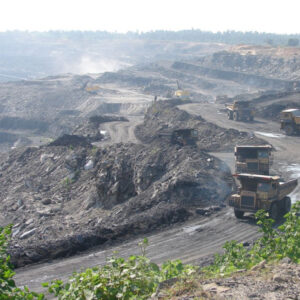
Mining involves various activities for extraction of minerals and metals from the earth. The heavy metal content of these samples obtained from mine site to study the distribution pattern of trace metals due to mining activity. Results indicated that the soil samples collected showed very high content of heavy metals, especially, iron being determined in the range of 2092- 3106 mg-Kg-1 and highest concentration of it was 5284 mg-Kg-1 in blended hematite quartz (BHQ) soil sample. However, the concentrations of trace metals in the water samples were still within the permissible limits according to the drinking water quality standards of World Health Organization (WHO). To the date, extensive mining activities have not made any significant contribution to the heavy metal content of the studied water samples. The present study envisages on quantitative determination and impact of heavy metals in the surface water and soil samples due to mining.
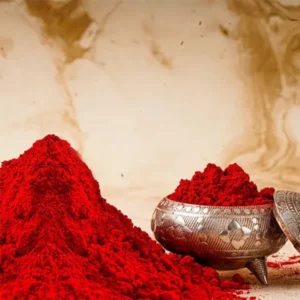
India is a very great country because there are so many religions and so many festivals of them. All the religions have same respects in here. One of the beautiful and very old religions is ‘Hindudharma’ in here. It is a biggest religion in here. Maximum populations follow this religion in India. ‘Sindoor’ is an important part of this religion. Actually Sindoor is a red colour which is used in festival, worship of god, and married woman uses as a sign of marriage. This colour is used in here because red colour is a symbol of energy and log life in this religion. Modern sindoor mainly uses vermilion, which is an orange-red pigment. Vermilion is the purified and powdered form of cinnabar, which is the chief form in which mercury sulfide naturally occurs. As with other compounds of mercury, sindoor is toxic and must be handled carefully. Sometimes, red lead (lead tetroxide, also known as minimum) is added to sindoor. Red lead is toxic and a known carcinogen for laboratory animals, though its carcinogenicity to humans has not been established. Traditional sindoor was made with turmeric and alum or lime, or from other herbal ingredients. Unlike red lead and vermilion, these are not poisonous. In early 2008, allegations of high lead content led the U.S. Food and Drug Administration to recall batches of sindoor from several manufacturers.
Determination of the certain major and trace elements was carried out in drinking water supply scheme in three districts of Meghalaya. This work aims to identify trends resulting in the deterioration of drinking water which is also a potential source of environmental contaminants. About 50 samples, each from one district, were collected both from the source and various tanks and tap. The elements determined are Li, Na, Cr, Mn, Fe, Co, Ni, Cu, Zn, As, Rb, Ag, Au, Pb, Cd, Se, Ca, K, and Mg. The pH is slightly lower than neutral pH of 7 while the turbidity is very high even after treatment. The concentrations of Ca and Mg are found to be deficient. The elements Cr, Fe, Co, Ni, Zn, Mo, and Pb decrease after treatment while Mn, Cu, and Cd increase slightly after treatment. Se concentration is found to be much higher than expected. The results were compared with the standard recommendation values for the quality of drinking water. This study provides a general indication of where water-quality constituent concentrations met or exceeded water-quality standards and the data presented in this report will be useful from public health point of view.
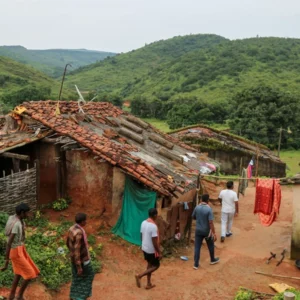
Lead concentration in different people of different age groups and sexes were analyzed by AAS around five different villages in a derelict Lead mine area in Sundargarh district of Odisha state. Different blood parameters studied included total RBC and total WBC counts, gm % of haemoglobin, haematocrit, mean. Differential counts of WBCs were also done for the respective groups. A correlation coefficient („r‟) between lead content of blood and Mean values of these parameters was worked out. The r – values are found to be highly significant.